
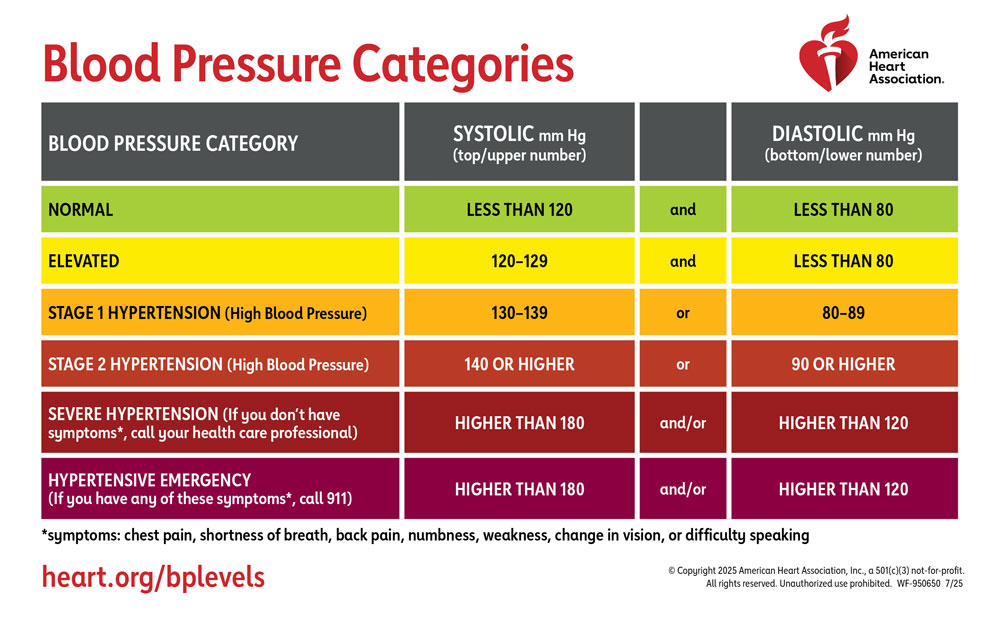
In August 2025, the American Heart Association (AHA) and the American College of Cardiology (ACC) jointly issued updated guidelines of the management and prevention of hypertension (high blood pressure). What are the new updates, and why does it matter?
The new 2025 guidelines re-define the parameters used to diagnose hypertension and also recommend earlier and more aggressive treatment of high blood pressure, given the increased recognition of the risks of untreated hypertension. Normal blood pressure is now defined as being LESS than 120/80. Elevated blood pressure (“pre-hypertension”) is defined as systolic blood pressure 120-129 and diastolic blood pressure <80. Stage 1 hypertension is systolic blood pressure 130-130 or diastolic blood pressure 80-89. (Earlier guidelines did not consider an individual as having a diagnosis of hypertension unless BP was equal or greater to 140/90.)
Blood pressure is an important vital sign because about 1 in 3 U.S. adults have hypertension, yet many people don’t realize it because it is mostly a ‘silent’ condition. However, hypertension is also the #1 risk factor for cardiovascular conditions such as heart attack or stroke. Untreated hypertension can also accelerate kidney disease, peripheral vascular disease, sexual dysfunction, and vision problems. There is also increasing evidence that hypertension is associated with cognitive decline and dementia.
Whether or not you have a diagnosis of hypertension, pre-hypertension, or even if you’ve been told that your blood pressure is perfect, everyone can benefit from the lifestyle modifications and hypertension prevention strategies recommended by the AHA/ACC. These include losing weight if you are overweight or obese; following a heart-healthy diet such as the DASH (Dietary Approaches to Stop Hypertension) eating plan; limiting sodium intake to no more than 2,300 mg of sodium per day (and ideally, no more than 1,500 mg per day for most adults); exercising regularly (≥150 minutes of moderate physical activity per week and resistance exercise ≥2 days per week); and managing stress in your life. Also, intake of any amount of alcohol is associated with higher systolic blood pressure, even in individuals without hypertension.
If you have not had a visit in a while to check your blood pressure, or you are concerned that you may have undiagnosed hypertension, contact us today to make an appointment with your Wayland Personal Physician!